LEARN FROM THE MASTERS
ESPY-TV MARTIAL ART VIDEOS


AIKI-JIUJITSU
Aiki-jiujitsu is an advanced level of martial arts initially taught only to high-ranking members of the Takeda clan. Morihei Uyeshiba adapted it to create modern Aikido. While aikido and aiki-jiujitsu deal extensively with weapon training, it's the empty hand aspects that are best known in the west.


BRUCE LEE'S JEET KUNE DO
The late BRUCE LEE is the most famous movie martial artist of all time, and he was also one of the premier martial art innovators of the 20th century. After years of study in Wing Chun, Thai Boxing, Karate, American Boxing and numerous other arts, Lee synthesized the martial art of Jun Fan Gung Fu & the philosophical system he called Jeet Kune Do. The system constantly evolved until his death in 1973. Lee promoted only three students as instructors in Jeet Kune Do and Jun Fan: James Lee, Dan Inosanto and Taky Kimura.

CHOY LEI FUT
KUNG FU
A Shaolin martial art system, Choy Li Fut was established by its founder, Chan Heung in 1836. He named the system after his sifus, Choy Fok, Li Yao San and Fut for its Shaolin roots. A southern Chinese martial art system with a strong northern influence as seen in the footwork.
As a method of improving health and fitness, Choy Li Fut's forms, done at full speed, provide excellent cardiovascular exercise. The movements are mainly long circular motions with a variety of fast moving footwork. Choy Li Fut contains both external and internal training.
DRAGON STYLE KUNG FU
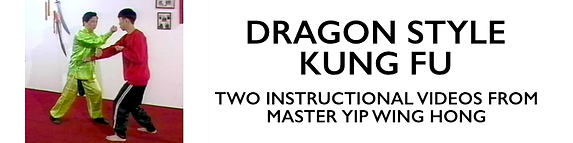
Dragon Style was devised in the late 1800's by the Shaolin nun, Ng Mui. Refined by the monk Tai Yuk and again by his disciple, Lam Yew Kwai who passed the system to Cho Sam. Strong & fast, the Dragon Style uses unusual slide-stepping and arm positioning. The Dragon fighter presses his attack close-in to prevent the opponent from retaliating.
DRUNKARD'S BOXING KUNG FU
An intricate and challenging form with an explanation and demonstration of the unique Drunken free fighting theory. Jo-Si Chen teaches Drunkard's Boxing integrated with the Snake Style of kung fu.
EAGLE CLAW KUNG FU
Eagle Claw Kung Fu (Faan Tzi Ying Jow Pai) is known for its peculiar and powerful gripping techniques and for it's intricate system of locks, takedowns, and pressure point strikes. Eagle Claw is one of the oldest of the surviving Northern Shaolin systems.
The style started at a time of Mongolian incursions into northern China, when General Ngok Fei learned hand techniques from a Shaolin monk named Jow Tong. Later during the Ming Dynasty the hand techniques were combined with the Faan Tzi system by Shaolin monk, Lai Chin, creating the system called Northern Eagle Claw.
During the 1800's, the system was passed along to the Lau family. In the 1920's one of the top fighters in all of China was Eagle Claw master Chan Tzi Ching. One of his top students was Ng Wai Nung who went on to assist the famous Eagle Claw Grandmaster Lau Fat Mon.


ESCRIMA
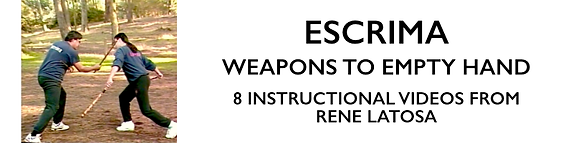
Escrima, the Spanish word for "fencing," is the name given to both armed and unarmed applications of the Filipino martial arts. In learning a battlefield art which only recently developed into a sport, the student begins with single or double weapons and gradually learns to apply the same techniques empty-handed.
A deadly serious approach to fighting, Escrima is known for lighting fast self-defense and simultaneous counter-attacks and blocks. Each of these videos teach different aspects of the Latosa Escrima System as taught in his schools. The videos complement each other but also stand on their own as complete training aids.
HUNG GA KUNG FU
HUNG KUEN, one of the fiercest fighting systems in Southern China, utilizes the five animals and five elements of Chinese philosophy. The style was founded in the 18th century by Hung Hei Guen who tudied martial arts under the monk Chee Sin of the Fukien Siu Lum (Shaolin) Temple. This is one of the most prominent of the family kung-fu systems in southern China.
HUNG GA (which translates as "Hung's style") is known for its rigorous training of the stances and other foundations. HUNG GA combines hard and soft techniques to achieve an effective and complete system of health and self-defense.


JIU-JITSU
Nobuyoshi Higashi developed Kokushi-ryu jujutsu in 1965 after many years of studying the ancient and modern martial arts of jujutsu, judo, karate, aikido, kendo and others. Beginners and advanced students, as well as instructors, can use the new ideas and techniques of Kokushi-ryu jujutsu to develop their discipline and self defense skills
JUDO
While considered by many martial artists to be a sport, Judo is a very effective ground fighting martial art. The techniques are effective in rendering an opponent immobile by holding, choking or inflicting excruciating pain. These techniques are from the Kodokan Judo system.


KENPO
KENPO means fist "principle," and is sometimes called Chinese boxing or Chinese Karate. It was brought into the open in Hawaii in the 1940's by James Mitose and popularized by the late Professor William K.S. Chow. The art was transplanted to southern California in the late 1950's where its best known exponent was the late Ed Parker.
Kenpo differs from many styles of karate in its preference for circular movement over linear techniques.
MAPHILINDO SILAT
There are literally hundreds of systems of Silat in Malaysia, the Phillipines & Indonesia. These fighting arts were designed for survival in real combat, not sport. Because of this, instructors have been very strict about who they pass these arts on to.
Maphilindo Silat was created by Guro Dan Inosanto to honor his instructors from the many systems of silat he has studied.


PANANANDATA - FILIPINO WEAPONRY
PANANANDATA, the art of Filipino weaponry taught in the northern Philippines is quite different from the southern style. The most noticeable differences are the 31" long rattan stick, the horse-whip, rattan rings and other unique weapons. Pananandata stresses footwork, explosive jumping and un-padded free-fighting. An individual's own fighting style is encouraged in this unique Filipino family system.
SANUCES-RYU
JIU-JITSU
Professor Powell started his martial art training in the late 1940's. Combining boxing, jiu-jitsu, karate, kung fu and various other martial arts, Prof. Powell devised a system unparalleled in its devastating efficiency and brute simplicity. Few have walked away from a demonstration without being awed by it's power and technique.


SEVEN STAR PRAYING MANTIS KUNG FU
SEVEN STAR PRAYING MANTIS kung fu was founded in the 17th century by Wong Long, a Shaolin student. Master Long developed a new system based on his observations of the praying mantis. He copied the insect's quick grasping and ripping claw movements, then classified them into attack and defense patterns. Noting that the mantis has weak legs, Wong Long built the system's footwork on the agility of the monkey, then completed his new system by importing the best techniques from other styles of his day.
SHAOLIN FIVE ANIMALS KUNG FU
Many Shaolin temples devised an extremely advanced form that would require great effort and diligent practice for the monks to master. Frequently this form was all that a monk would need to learn to increase strength, improve health and learn self-defense.


SNAKE STYLE KUNG FU
Snake Fist, a legendary style of Shaolin kung fu, has an unusual fist patterned after the striking head of the snake. The style was adopted and nurtured by the Chen family and is now known as Chen Snake Fist Kung Fu.
TIGER CLAW KUNG FU
The true origin of TIGER CLAW (Fu Jow Pai) is shrouded in mystery. It is written that over 100 years ago two kung fu instructors met in the courtyard of Hoy Hong Temple for a duel. Before either of them could inflict injury, they were thrown apart by an elderly monk who invited them into the temple to discuss their dispute. Astounded by the old monk's power they forgot their differences and asked to be the monk's students.
One of the men, Wong Bil Hong, was taught the Hark Fu Moon (Black Tiger) system. The style was brought to New York by his nephew, Wong Moon Toy, who instructed Grandmaster Wai Hong.


VEE ARNIS JITSU
VEE-ARNIS-JITSU is one of the few systems of martial arts that tries to give the student a working knowledge of self-defense as soon as possible. The system's founder, Prof. Visitation has achieved legendary status among martial artists on the East Coast.
The Vee-Arnis system incorporates the stick defenses and techniques of Filipino Arnis and the grappling methods of Japanese Jiu-jitsu.
WING CHUN KUNG FU
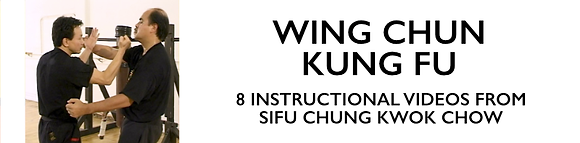
WING CHUN's history is traditionally dated to the seventeenth century. The nun, Wu Mei, who escaped the destruction of the Shaolin Temple, taught a simplified defensive fighting system to her adopted daughter named Wing Chun. It's precisely the simplicity and directness that has made Wing Chun such a popular style. Brought to Hong Kong by the late Yip Man and popularized by Bruce Lee, Wing Chun has become one of the most widely practiced styles of martial art in the world.

WU STYLE
TAI CHI CHUAN
While Tai Chi Chuan is reputed to have started as early as the 7th century, documentary evidence goes back to the early 18th century. In the 19th century, Wu Yu-hsiang introduced his own innovations to the dominant Chen and Yang styles and created the Wu style. Wu style Tai Chi Chuan is characterized by continuous motion, relaxation, large circular techniques and other movements that make the Wu style unique. The art can be divided into five sections: solo form, push hands, weapons, self-defense / free fighting and Tai Chi Chin-na techniques.
YANG STYLE
TAI CHI CHUAN
TAI CHI CHUAN (Grand Ultimate Fist) is a fighting system based on the intricacies of Taoist philosophy. The Yang style is the best known and most widely practiced style in North America, and dates to the eighteenth century.
Tai Chi Chuan is popular not only as an effective fighting art, but also as a relaxation and health maintenance system for people of all ages and from all walks of life.
